

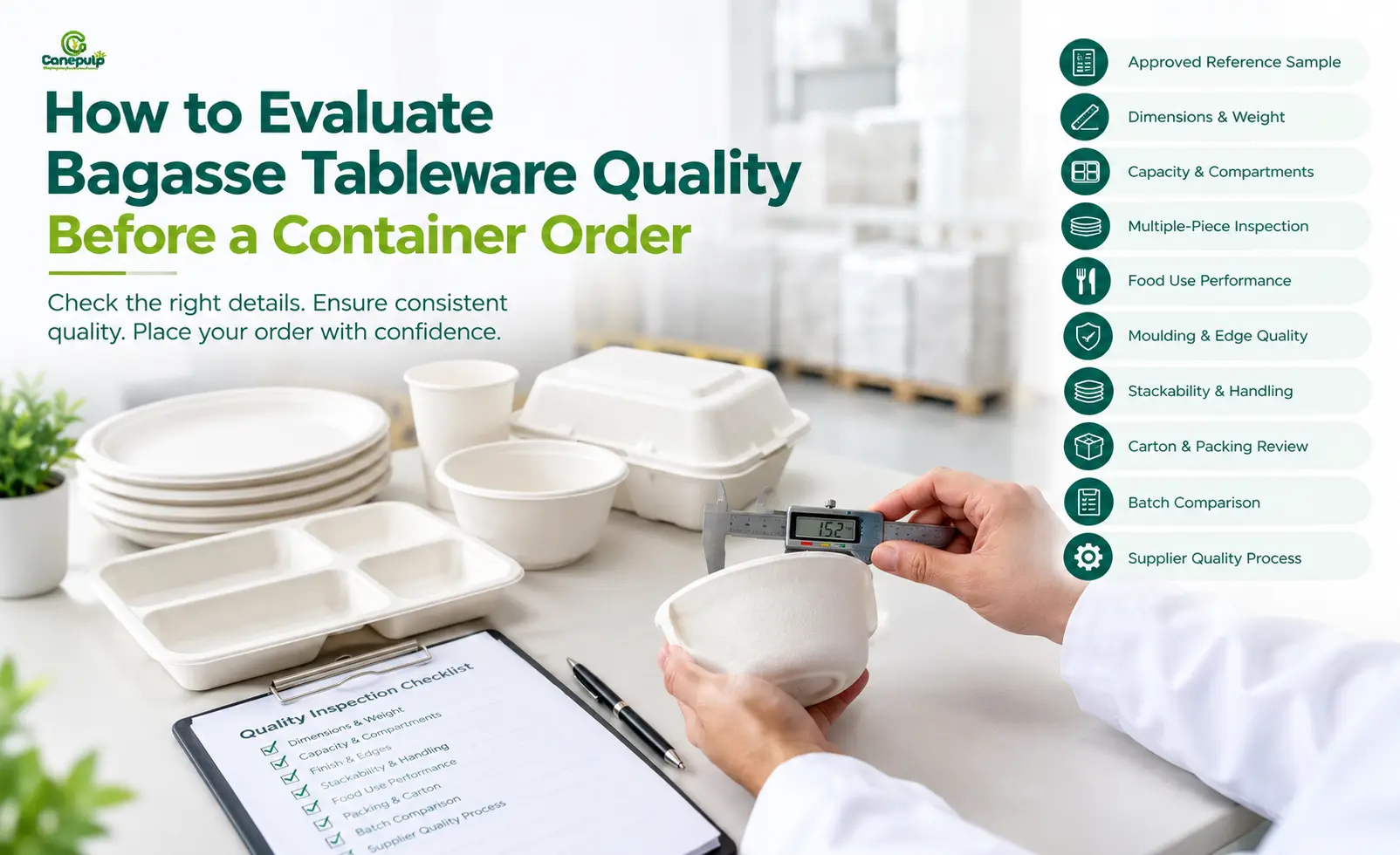
A sample can look acceptable at first glance and still leave important questions unanswered before a large production run is approved. For B2B buyers, the real issue is not whether the sample looks good in isolation. It is whether the sample represents the agreed specification, can be repeated consistently in production, and performs in the way the buyer expects during actual use. Before committing to a container-scale order, the buyer should compare the approved sample, the product specification, the production batch, and the shipment packaging against the same practical quality standard.
1. Start With an Approved Reference Sample
The first practical step is to work from a clearly defined reference sample. A buyer should know the exact product, the intended function, the size, the weight, the capacity, any compartment configuration, the product finish, and the packaging reference for the sample. Without this, the buyer can approve a sample visually but still have no clear standard for what the larger production run should match.
An approved sample should be treated as a commercial reference point, not as a decorative product photograph. It should be linked to the relevant product description, the intended use, and any agreed buyer requirements. If the sample has a version or approval date, the buyer should record that information so future production batches can be compared to the correct reference point.
This creates clarity before the order grows beyond a few cartons. The buyer is not only deciding whether the sample looks right; they are also establishing the production standard that the larger order should follow. That is the difference between sample approval and a meaningful commercial specification.
2. Check Dimensional Consistency
Dimensional consistency is one of the easiest ways for a buyer to spot quality risk early. The sample should be checked for the expected diameter, length, width, depth, compartment dimensions where relevant, and product profile. Buyers should also review whether the shape is consistent from piece to piece and whether the dimensions support the intended use, stacking or packing logic, and market expectations.
Small differences can matter more than they first appear. A product with a slightly different profile may still appear acceptable in a single sample, but may cause issues in warehouse stacking, packing calculations, or product presentation. A product used for portioned meals or multi-compartment service may be especially sensitive to dimensional drift because fit and service flow are part of the product value.
The buyer should agree the acceptable tolerance with the supplier before the large order is released. A sample is much more useful when it is linked to a product specification that describes the intended dimensions and the negotiation around acceptable variation. That is a practical procurement step and a more reliable path than relying on visual impressions alone.
3. Test the Product With the Food It Will Actually Carry
A bagasse tableware sample should not be judged only on appearance or nominal product description. It should be evaluated against the food it will actually carry. A plate intended for hot food, a bowl designed for rice or soup, a tray used for heavier portions, and a clamshell used for takeaway meals all need to be reviewed under their own operating conditions.
Buyers can test realistic conditions such as hot food, oily food, heavier portions, sauces, gravy, and extended holding time. The practical questions are: does the product soften too much, deform, lose rigidity, leak, or lose stack stability under use? Does it handle a normal commercial service flow, or does it only perform in a controlled display state? A sample should be judged in relation to the actual end-use rather than only a showroom impression.
This is an important point for procurement teams because one good-looking sample does not necessarily tell the full story of how the product will behave when used repeatedly in a real foodservice environment. The buyer should document their observations and decide whether the sample matches the expected operating performance for the product’s intended market and customer base.
4. Compare Multiple Pieces, Not Just One
A single sample is not enough to judge consistency. A serious buyer should review multiple pieces from the same sample set and compare them as a batch. That means looking at shape, weight, dimensions, finish, edges, and overall structure across more than one item. Large orders are only safe when the production process can produce consistent results across a full run, not when one sample is unusually good.
This multi-piece review helps the buyer assess whether the sample is representative. If several pieces differ significantly in size, weight, or finish, the buyer is seeing a risk signal that should not be ignored. A product that gives a strong first impression but has visible variation across several pieces is much riskier to approve for a large order.
This step is particularly important for large or repeat orders, where the cost of scaling a production issue is much higher than the cost of a more careful sample review. A buyer should not rely on one perfect specimen if there are signs of drift or inconsistency across multiple pieces.
5. Check Moulding, Edges and Finish
Visible manufacturing quality is another practical part of quality evaluation. Buyers should inspect the sample for uneven edges, incomplete forming, rough trimming, thin sections, warping, weak points, visible fibre defects, cracks, or irregular surface texture. These defects are often easy to overlook in a single sample, but they can affect handling, presentation, stacking, and product perception in a full shipment.
The buyer’s objective is not simply to say the sample looks polished. It is to determine whether the sample is suitable for repetitive commercial use, safe handling, clear presentation, and stable production output. A product with rough edges or inconsistent shaping may still pass a casual visual check but fail in a formal buyer evaluation because the finish is not stable enough for repeat production.
This section is intentionally focused on the buyer-side inspection view. The goal is to help the buyer know what to look for when reviewing a finished product, without repeating the broader manufacturing-process or product-page explanations already available elsewhere.
6. Check Stackability and Handling
A quality check should include stacking and handling, because packaging and service workflows depend on these factors as much as the product’s appearance. Buyers should consider whether pieces stack evenly, whether the stack remains stable, whether pieces separate cleanly, and whether stacking or repeated handling leads to deformation. These are practical issues for warehouses, restaurants, foodservice supply, and distributor operations.
The buyer should also think about how the product behaves in transit and in service. If a stack becomes unstable, the product is harder to pack, ship, and store. If stacking leads to edge damage or warping, the buyer may face a quality issue even if the initial sample looked acceptable. A product that cannot be handled and stacked consistently is not a reliable candidate for a large shipment.
This is especially important when buyers are evaluating a full container order. The safest approach is to test the sample under the same handling and storage conditions expected in the actual trading and service flow. That creates a realistic quality review rather than a purely visual one.
7. Inspect the Carton and Packing, Not Only the Product
Product quality can be compromised by ineffective packing, even when the individual pieces are acceptable. A buyer should review the carton count, pieces per carton, carton dimensions, packing density, carton strength, internal protection where relevant, labeling, and consistency of shipping setup. A buyer should also confirm that the carton and packing approach match the approved sample and the intended shipment configuration.
The purpose of this review is not to duplicate export-marketing content. It is to make sure the product is protected through the real shipping process. For a container-scale order, packing quality affects product arrival condition, warehouse handling, and the buyer’s ability to sell or distribute the goods without rework or loss. The carton is part of the commercial quality picture, not a separate administrative item.
A practical buyer should compare the approved sample, the carton configuration, and the shipment method before approving the order. If the packing specification differs from the actual approved product or the expected route, there is a commercial risk even before the shipment leaves the supplier.
8. Compare the Production Batch With the Approved Sample
The critical difference between sample approval and production approval is that the buyer should compare the production batch against the approved sample and specification, not just treat the sample as a one-time visual check. A production run should be reviewed for the same elements: size, weight, shape, finish, stiffness, mould quality, and packing configuration.
This is where the buyer confirms that the approved sample was not simply a lucky unit or a display piece. Production review reduces the risk that a large shipment moves forward with material drift in size, rough finish, or inconsistent product behavior. For a container order, the cost of an undetected specification mismatch can be much higher than the cost of an additional inspection step or a more careful production review.
The buyer should also use the approved sample as the reference when discussing any production change. If the supplier introduces revision, packaging changes, or a new process step, the buyer should compare the new batch to the original approved sample and decide whether that revision is acceptable. This gives the buyer a production-control mindset rather than a one-time approval mindset.
9. Ask for the Right Quality Information Before Shipment
A buyer should ask practical quality questions before a large order is released. What specification is being used? What dimensions are being checked? What is the agreed product tolerance? How is the production batch inspected? What happens when a batch differs from the approved sample? How is packing verified? Which product documents apply? These questions help the buyer create a structured quality conversation without overcomplicating the commercial process.
The buyer should also ask about how non-conforming goods are managed and what record is kept after final approval. In a large order, a supplier’s response to non-conforming product is as important as the product itself. That is part of the quality system, even if it is not always described in the marketing materials.
This is a useful place to connect to deeper reference material, such as the quality-control overview and the manufacturing process, without copying those pages. The buyer is using those resources to understand how to evaluate a real order, not to replace the actual commercial conversation with a generic article.
10. Know When Independent Inspection Makes Sense
For higher-value or higher-risk orders, a buyer may decide that independent inspection or third-party verification is useful. This is especially relevant when the product is important to a customer’s brand, the destination market has stricter requirements, or the order volume is large enough that a quality issue could become a serious commercial problem.
Independent inspection can support a pre-shipment review of product quality, carton condition, labeling, and quantity. It is not a mandatory step for every order, but it is a valuable tool when the buyer has a high level of commercial risk or when the supplier’s quality process needs to be validated against an independent standard. The decision depends on the order value, product importance, supplier history, and buyer’s quality requirements.
The key takeaway is that quality evaluation scales with risk. A small, low-risk trial order may require a lighter process, while a container shipment usually deserves a more disciplined inspection and reference process. This is a practical B2B procurement principle rather than a blanket legal or regulatory requirement.
Bulk Order Buyer Checklist
- Approved reference sample recorded
- Dimensions and weight verified
- Capacity and compartment fit checked
- Multiple-piece sample inspection completed
- Food-use performance reviewed
- Moulding and edge quality inspected
- Stackability and handling tested
- Carton and packing reviewed
- Production batch compared to approved sample
- Supplier quality process discussed
Before Approving a Container Order, Confirm the Quality Reference
Review the approved sample, compare the production batch, check packing and handling, and align the commercial specification before a large shipment is released. The right quality review prevents small variations from becoming a costly production problem.
The right way to evaluate bagasse tableware quality before a container order is to treat the approved sample as a production reference, not as a one-time visual approval. Buyers should compare product dimensions, structure, performance, finish, stacking, carton configuration, and the production batch against that reference. A disciplined buyer-side review gives the procurement team a clearer basis for approval, reduces commercial risk, and creates a more reliable path from sample to repeat production.