

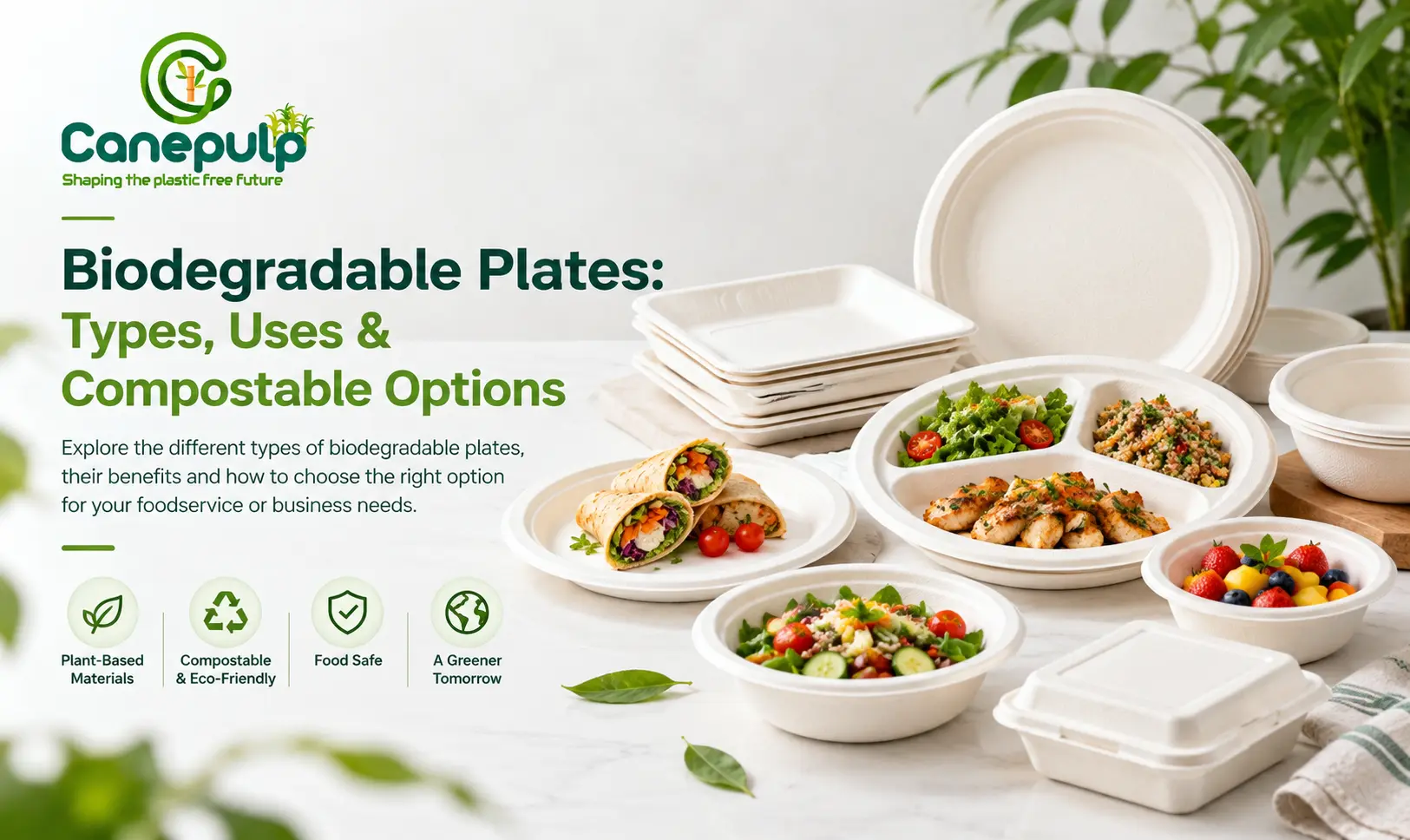
Biodegradable plates are made from different materials, and the term alone does not establish a product's breakdown conditions, food performance or disposal route. This guide compares common plate types, including sugarcane bagasse, paper and palm leaf, by material, typical use and practical buying considerations. It also distinguishes biodegradable claims from compostability so readers can choose based on the exact product and local waste infrastructure. For business buyers moving from material selection to procurement, see the separate bulk-order checklist.
1. What Are Biodegradable Plates?
Biodegradable plates are plates made from materials that can be broken down by microorganisms under suitable environmental conditions. Depending on the material and product construction, the process may require particular levels of moisture, temperature, oxygen and time. The term biodegradable alone does not establish how quickly a plate will break down or whether it is suitable for home composting, industrial composting or disposal in a particular waste system.
Disposable plates described as biodegradable may be manufactured from plant fibers, paper or other materials. Some products may also contain coatings, binders, inks or other components that affect their disposal characteristics. For this reason, buyers should evaluate the complete product rather than relying only on a material name or environmental label.
When comparing biodegradable plates, check the product composition, intended food use, available test reports and the disposal conditions specified by the manufacturer. These details provide a more practical basis for choosing plates for everyday meals, commercial kitchens, catering events or wholesale distribution.
2. Types of Biodegradable Plates
Several types of disposable plates are marketed as biodegradable or environmentally preferable alternatives. Their characteristics differ according to the raw material, manufacturing method, shape, finish and intended application. The following comparison explains the main options buyers may encounter.
- Sugarcane bagasse plates: Made from fibrous sugarcane residue remaining after juice extraction. The fiber can be processed and molded into plates with different diameters, shapes and compartment layouts. They are commonly considered for restaurants, takeaway meals, catering and foodservice supply.
- Paper plates: Made primarily from paper or paperboard. Their strength, moisture resistance and disposal characteristics depend on the paper grade, thickness and any coatings or treatments. Buyers should check whether the particular product is suitable for wet, oily or hot foods.
- Palm leaf plates: Typically produced from fallen palm leaves that are cleaned, shaped and pressed. Their natural appearance can suit events, outdoor dining and selected catering applications. Size, shape, finish and availability can vary by producer.
- Other molded plant-fiber plates: Plates can also be manufactured from other plant fibers or agricultural residues. Performance depends on the fiber blend, molding process, product design and any additional materials used.
- Compostable bioplastic plates: Some disposable plates use bioplastics or bioplastic blends designed for composting under specified conditions. Plant-derived content does not automatically mean that a product is biodegradable in every environment or suitable for home composting.
3. Sugarcane Bagasse Plates: A Practical Foodservice Option
Sugarcane bagasse is the fibrous material left after sugarcane juice has been extracted. Instead of treating this residue only as waste, manufacturers can process the fiber and form it into molded-fiber products such as plates, bowls, trays and food containers.
Bagasse plates are available in different sizes and designs to suit individual meals, side dishes, shared servings and portioned food presentations. Depending on the product range, buyers may find round plates, square plates and compartment plates designed to separate different foods on the same plate.
For restaurants, caterers and foodservice distributors, molded bagasse plates can be a useful alternative to evaluate when selecting disposable tableware. Their suitability depends on the exact product specification, including dimensions, weight, rigidity, food-contact suitability and the conditions under which the plate will be used.
Buyers should not assume that every bagasse plate has identical heat resistance, oil resistance, leakage performance or composting characteristics. These properties should be confirmed for the specific SKU and supported by appropriate product information or testing where required.
Explore the available bagasse plates from Canepulp to compare plate sizes and product options for foodservice and bulk purchasing requirements.
For a closer look at how molded-fiber products are made, read about Canepulp's manufacturing process.
4. Types of Biodegradable Plates by Shape and Design
Apart from material, plate design plays an important role in food presentation, portioning, stacking and storage. The right format depends on the menu, serving style, kitchen workflow and distribution requirements.
- Round biodegradable plates: A versatile format for everyday meals, snacks, restaurant service, parties and catering. Available diameters allow buyers to select plates for smaller portions or full meals.
- Square and rectangular plates: Useful for selected food presentations, serving counters, events and applications where a different layout is preferred. Availability depends on the material and supplier range.
- Compartment plates: Designed with separate sections for main dishes, sides, sauces or other food components. They are often considered for meal services, takeaway combinations and portion-controlled menus.
- Small plates: Suitable for snacks, desserts, appetizers, samples and smaller servings. Buyers should compare usable surface area rather than relying only on the nominal diameter.
- Large dinner plates: Designed for larger portions, complete meals and catering service. Rigidity, stacking and usable area become particularly important for heavier food portions.
- Deep or bowl-style formats: Useful when the food application needs more depth than a conventional flat plate. Buyers should verify whether the selected product is a plate, bowl or tray and assess its suitability for the intended food.
5. Biodegradable Plates vs Compostable Plates
Biodegradable and compostable are related terms, but they should not be treated as interchangeable. Biodegradable describes a material's ability to break down through biological processes under suitable conditions. By itself, it does not specify a universal timeframe, a particular disposal route or the quality of the material remaining after breakdown.
Compostable products are designed to break down under specified composting conditions and meet defined requirements for compostability. Depending on the applicable standard and certification, these requirements may address disintegration, biodegradation and potential effects on the resulting compost.
A product described as compostable may require industrial composting facilities rather than a home composting system. Access to suitable facilities also varies by location. Therefore, buyers should check the exact product claim, applicable standard, certification scope and local waste-management arrangements.
For commercial purchasing, ask the supplier for product-specific documentation rather than relying on general statements about plant-based materials. A plate made from natural fiber should not automatically be described as certified compostable unless the relevant evidence supports that claim.
When weighing material choices for foodservice, also see our comparison of paper and bagasse food packaging, which explains why coatings, food type and use conditions matter.
6. Benefits and Limitations of Biodegradable Plates
Biodegradable plates can help businesses evaluate alternatives to conventional disposable tableware, particularly where material sourcing, waste management and customer preferences are part of procurement decisions. The actual benefits depend on the product, manufacturing process, transportation, use and end-of-life conditions.
- Alternative material choices: Options made from sugarcane fiber, paper and other materials allow buyers to compare products beyond conventional plastic.
- Multiple foodservice applications: Disposable plate formats can support restaurants, catering, takeaway, events, canteens and institutional meal service.
- Different designs and portion sizes: Buyers can select round, compartment, small or large plates according to menu and serving requirements.
- Potential alignment with waste programs: Products with verified compostability may fit a suitable composting program where collection and processing facilities accept them.
- Material and performance differences: Not every product provides the same rigidity, moisture resistance, oil resistance or heat performance. Product testing and sample evaluation remain important.
- Disposal limitations: Biodegradable does not mean that a plate can be discarded anywhere without environmental consequences. Incorrect disposal and unsuitable local conditions may prevent the expected breakdown process.
- Claims require evidence: Buyers should verify environmental claims, product composition and certifications before making purchasing or marketing decisions.
7. How to Choose the Right Biodegradable Plates
Choosing the right biodegradable plate starts with the intended food application. A plate used for dry snacks may have different requirements from one used for hot meals, oily foods, sauces or takeaway combinations. Businesses should define the practical requirements before comparing suppliers or placing a bulk order.
Before approving a bulk run, compare the sample with the written specification using this bagasse tableware sample-approval checklist. Buyers should also review the supplier's quality-control process for the requirements that matter to their order.
- Food type: Identify whether the plate will hold dry snacks, hot meals, oily foods, sauces, desserts or mixed dishes.
- Size and usable area: Compare the actual dimensions and usable serving surface with the portion size and menu.
- Plate design: Choose flat plates for general serving or compartment formats when separating different foods is important.
- Rigidity and handling: Evaluate whether the plate remains suitable for the expected food load, serving method and transport conditions.
- Heat and moisture performance: Confirm the manufacturer's specifications for temperature, moisture and oil exposure rather than assuming all plates perform alike.
- Food-contact documentation: Request relevant information and reports for the exact product and intended application, especially for commercial use.
- Disposal route: Verify whether the product is biodegradable, certified compostable or suitable for a specific composting system, and check local acceptance requirements.
- Packaging and storage: Review pack quantity, carton dimensions, stacking, warehouse space and protection from moisture or contamination.
- Supplier reliability: For regular purchasing, consider product consistency, sample approval, order quantities, lead times and repeat-order support.
- Total purchasing cost: Compare the quoted product, packaging, freight, import-related costs and expected handling requirements rather than looking at unit price alone.
8. Where Are Biodegradable Plates Used?
Biodegradable disposable plates are used across a range of foodservice settings. The appropriate material and design depend on the food served, the operating environment and the requirements of the buyer.
- Restaurants and cafes: For selected dine-in, takeaway and quick-service applications where disposable tableware is part of the service model.
- Catering companies: For events, business functions, parties and other occasions requiring disposable serving products in planned quantities.
- Food delivery and takeaway: For meal combinations and selected food orders, subject to the plate's suitability for the food and delivery conditions.
- Corporate cafeterias and canteens: For institutional and workplace meal service where procurement teams need consistent specifications and supply.
- Outdoor events and festivals: For temporary foodservice setups where the selected product, waste collection and disposal plan are appropriate.
- Distributors and wholesalers: For supplying restaurants, caterers, foodservice operators and other business customers with recurring tableware requirements.
- Retail and private-label programs: For businesses developing their own disposable tableware range, subject to packaging, product approval and applicable labeling requirements.
9. Buying Biodegradable Plates in Bulk: What Businesses Should Check
For importers, wholesalers, distributors and foodservice suppliers, bulk purchasing involves more than choosing a material. A clear product specification and a documented supplier process help reduce confusion between samples, quotations, packaging and repeat orders.
Start by identifying the plate format, diameter, weight, material, intended food use and required quantity. If several SKUs are needed, list each product separately and confirm the minimum order quantity and carton configuration for each one. The available quantities and mixed-SKU options depend on the manufacturer and production plan.
Request physical samples before approving a large order. Evaluate the plates under representative serving conditions and record the accepted specification. Also confirm carton quantity, dimensions, gross and net weight, lead time, shipping terms and the documents available for the intended market.
If you need a branded product, discuss private-label packaging, artwork, labels, barcodes and carton markings before production. The final artwork and the product sample should both be approved so that branding changes do not create confusion about the actual product specification.
Use this bulk bagasse tableware buying checklist alongside your supplier quotations to compare specifications, packing and repeat-order readiness.
Canepulp supports B2B inquiries for molded-fiber tableware and food packaging. Businesses can review the bagasse plate range and contact the team to discuss specifications, samples, order quantities and packaging requirements.
10. Are Sugarcane Bagasse Plates Suitable for Restaurants and Catering?
Sugarcane bagasse plates can be considered for many restaurant and catering applications, but suitability should be determined by product design and actual operating requirements. Buyers should evaluate plate rigidity, serving size, handling, stacking and the food types the product is expected to hold.
For hot meals, oily dishes or foods containing sauces, request product information that covers the relevant conditions. Where needed, test samples using representative menu items and serving durations. Do not assume that every plate in a material category has identical heat tolerance or resistance to liquids and oils.
Catering operators and foodservice distributors should also consider storage, transportation and service speed. Plates that fit the portion size, stack efficiently and remain practical for the intended service method can help simplify operations. The final selection should be based on the exact SKU rather than on material descriptions alone.
If your program includes recurring commercial orders, review the manufacturer and sourcing information before finalizing a supplier.
11. Frequently Asked Questions About Biodegradable Plates
What are biodegradable plates made of?
They can be made from materials such as sugarcane bagasse fiber, paper, palm leaves, other plant fibers or certain bioplastic materials. Composition varies by product, so buyers should check the manufacturer's specification.
Are biodegradable plates the same as compostable plates?
No. Biodegradable describes biological breakdown under suitable conditions, while compostable products must meet defined composting requirements. The actual claim and disposal conditions should be checked for the specific product.
Are sugarcane bagasse plates biodegradable?
Sugarcane bagasse plates are made from plant fiber, but the precise breakdown behavior depends on the product construction and disposal environment. Confirm the manufacturer's evidence before relying on a specific environmental claim.
Can biodegradable plates be used for hot food?
Some products are designed for hot-food applications, but suitability varies. Check the product specifications and evaluate a sample under the intended serving conditions.
Are all biodegradable plates suitable for home composting?
No. A biodegradable claim does not establish that a product is suitable for home composting. Check the product's certification or instructions and the requirements of the intended composting system.
What is the difference between bagasse plates and paper plates?
Bagasse plates are made from processed sugarcane fiber and molded into shape. Paper plates are made primarily from paper or paperboard. Their rigidity, moisture resistance, construction and disposal characteristics depend on the specific product.
What sizes are available for bagasse plates?
Sizes vary by manufacturer and product range. Canepulp offers different bagasse plate formats; buyers should check the product page or contact the team for the current available sizes and specifications.
Can businesses buy biodegradable plates wholesale?
Yes, manufacturers and suppliers may offer bulk or wholesale supply for business buyers. Minimum quantities, available SKUs, packaging options and lead times must be confirmed with the supplier.
What should importers check before buying compostable plates?
Importers should review the product specification, sample, intended food use, applicable documentation, compostability evidence where claimed, carton details, order quantity and shipping terms.
How can I choose a supplier for bagasse plates?
Compare product specifications, sample quality, production consistency, relevant documentation, order quantities, packaging, communication and export support. Confirm these details for the exact SKU before placing a bulk order.
For a detailed buyer-focused process, see what to check before buying bagasse tableware in bulk.
12. Explore Canepulp Bagasse Plates for B2B Supply
Canepulp supplies sugarcane bagasse tableware and molded-fiber food packaging for business buyers evaluating disposable plates and related foodservice products. The product range includes bagasse plate formats and compartment plate options for different serving and portioning requirements.
Importers, distributors, wholesalers, catering suppliers and private-label businesses can review wholesale supply options and discuss product specifications, available sizes, sample approval, minimum order quantities, carton packing and export requirements for their intended program. Product availability and order conditions should be confirmed directly for the selected SKU.
If you are comparing biodegradable plates for a commercial foodservice program, start by identifying the plate size, food application, quantity and destination market. Then review the product details and request the information needed for your purchasing and quality review.
Explore the bagasse plates and bagasse compartment plates pages to compare available formats. For broader product options, visit the Canepulp product range, review bulk order planning, or request a product-specific quote for your B2B program.
Bulk Order Buyer Checklist
- Identify the intended food application
- Choose the required plate material
- Confirm plate diameter and usable serving area
- Select flat or compartment plate design
- Review rigidity and handling requirements
- Confirm heat, moisture and oil performance for the intended use
- Review relevant food-contact documentation
- Verify biodegradable or compostable claims
- Check local disposal and composting requirements
- Request and evaluate product samples
- Confirm MOQ and available SKUs
- Review carton quantity and dimensions
- Confirm packaging and private-label requirements
- Check lead time and shipping terms
- Retain the approved product specification
Looking for Sugarcane Bagasse Plates for Your Business?
Review Canepulp bagasse plate options and request product specifications, samples, bulk quantities and packaging details for your foodservice or wholesale program.
Biodegradable plates are available in several materials and designs, including sugarcane bagasse, paper, palm leaf and other plant-based options. The right choice depends on the food being served, required plate size, product performance, documentation and local disposal arrangements. Biodegradable and compostable claims should always be checked against the specific product and its intended conditions. For restaurants, caterers, distributors, importers and wholesalers considering molded-fiber tableware, sugarcane bagasse plates are one option worth evaluating through product specifications and sample testing. Explore Canepulp bagasse plates and compartment plates to compare available formats and discuss your B2B purchasing requirements.